

Is Speech Therapy Right For Your Child?
At PediPlay, we provide many types of pediatric therapy to help your child. We work with children of all ages, in one-on-one sessions where we strive to provide the best quality of care for each family.
We work hard to create a warm and encouraging environment for your family to feel welcomed at PediPlay in Indianapolis, IN. Our goal is for us to team with each family while we work together to improve your child’s speech, language, and feeding skills. Our highly skilled speech therapists at PediPlay in Indianapolis, IN will pair with you to create a customized therapy plan tailored specifically to any challenges your child is experiencing. If your child needs speech, physical, or occupational therapy, contact our office today to learn more about our pediatric services.
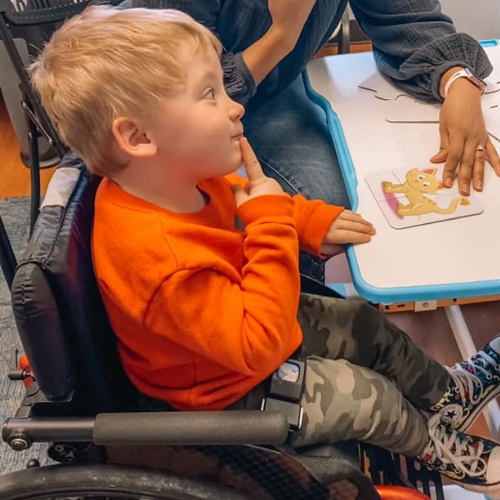
Common reasons why parents consider pediatric speech therapy:
- My child has trouble with the production of words, such as challenges making sounds correctly or fluently putting words together
- My child has difficulty with combining words and sentences together or organizing ideas and stories
- My child possesses a limited vocabulary for their age
- My child struggles to interact socially with their peers or understanding social cues from others
- My child struggles to understand spoken or written language
- My child struggles following directions, answering questions, or engaging in ongoing conversations
- My child struggles with chewing or swallowing their food
- My child has a diagnosis that requires augmentative methods of communication
- My child has suffered significant hearing loss
- My child has displayed changes in the quality of their voice
What Do Pediatric Speech Therapists Do?
Once an initial assessment is performed, a speech-language pathologist will determine the best course of action for your child. Our speech-language pathologists strive to make every therapy session fun while using research-based techniques to provide the highest quality of care. Especially for our youngest client’s therapy will look a lot like play! The key to pediatric speech therapy, as with therapy in general, is to challenge your child while fostering a warm, welcoming, and safe environment. Your child then develops skills while having fun at the same time! When these two aspects of therapy remain in balance with each other, your child will be able to make sustained progress toward their goals and ultimately maximize their potential.
Speech therapists interact with children by playing and talking while using pictures, books, or preferred activities to stimulate language development. They work within the child and families’ personal goals for what can make a lasting impact in each child’s life. Speech therapists might also work on a variety of oral skills, strategies, and strengthening activities to address advancing skills for eating, drinking, and swallowing. Our speech therapists’ pair with parents and their children to provide carryover education on the tools and strategies used in sessions, as they understand it’s the time spent practicing across children’s natural environments which really creates lasting change. If your child is having difficulties with their speech, it doesn’t have to be a cause for worry. Contact our office today to schedule an appointment with one of our pediatric speech therapists.
FAQs
Is Speech Therapy Right For Your Child?
Common reasons why parents will consider pediatric ST:
• My child has trouble with the production of words, such as challenges making sounds correctly or fluently putting words together
• My child has difficulty with combining words and sentences together or organizing ideas and stories
• My child possesses a limited vocabulary for their age
• My child struggles to interact socially with their peers or understanding social cues from others
• My child struggles to understand spoken or written language
• My child struggles following directions, answering questions, or engaging in ongoing conversations
• My child struggles with chewing or swallowing their food
• My child has a diagnosis that requires augmentative methods of communication • My child has suffered significant hearing loss
• My child has displayed changes in the quality of their voice
What Do Pediatric Speech Therapists Do?
Once an initial assessment is performed, a speech-language pathologist will determine the best course of action for your child. Our speech-language pathologists strive to make every therapy session fun while using research-based techniques to provide the highest quality of care. Especially for our youngest client’s therapy will look a lot like play! The key to pediatric speech therapy, as with therapy in general, is to challenge your child while fostering a warm, welcoming, and safe environment. Your child then develops skills while having fun at the same time! When these two aspects of therapy remain in balance with each other, your child will be able to make sustained progress toward their goals and ultimately maximize their potential.
Speech therapists interact with children by playing and talking while using pictures, books, or preferred activities to stimulate language development. They work within the child and families’ personal goals for what can make a lasting impact in each child’s life. Speech therapists might also work on a variety of oral skills, strategies, and strengthening activities to address advancing skills for eating, drinking, and swallowing. Our speech therapists’ pair with parents and their children to provide carryover education on the tools and strategies used in sessions, as they understand it’s the time spent practicing across children’s natural environments which really creates lasting change.
What is Pediatric Speech Therapy?
Pediatric speech therapy is a specialized area of healthcare that focuses on helping children improve their communication or feeding abilities.
Children who may benefit from speech therapy include those who have difficulty producing speech sounds accurately (articulation disorders), those who stutter, those who have voice disorders, those with language difficulties that affect their ability to understand language (receptive language) or use words and sentences to communicate effectively (expressive language). Additionally, pediatric speech therapists can also provide feeding therapy for children who have difficulties eating or swallowing due to a condition known as dysphagia. This can involve exercises to strengthen the muscles of the mouth, strategies to make eating safer or less difficult, and advice on mealtime behaviors and diet modifications.
Speech therapy can also benefit children with nonverbal communication difficulties, or children who use augmentative forms of communication (pictures, sign language, communication devices, etc). Children with social communication difficulties, such as taking turns in conversation, interpreting social cues, or engaging socially with peers, may also benefit from speech therapy.
Pediatric speech therapists use various techniques and tools to improve a child’s communication. They may use play and interactive activities to make the therapy enjoyable and effective for the child. They also work with the child’s family and other professionals to provide advice and strategies to support their communication development at home and in different settings.
Pediatric speech therapy plays a crucial role in helping children overcome communication challenges, which can significantly improve their overall quality of life and success in school and social situations.
Can speech therapy help my child?
Speech therapy can be a significant asset to children who have difficulties with communication of feeding for various reasons. It’s not only beneficial for children with identified speech or language disorders or learning differences, but it can also support those who struggle with the social aspects of communication, those with cognitive delays, or nonverbal children who may benefit from augmentative forms of communication.
• Speech Sound Disorders: Speech sound disorders may include articulation errors or phonological errors and involve difficulty correctly producing specific sounds. A child may substitute, add, omit, or distort sounds, making it difficult to understand them. In this case, speech therapy can help by practicing the sounds the child finds challenging. Techniques may involve showing the child how to produce specific sounds and giving feedback as they attempt these sounds. They may also work on building awareness and recognition of the sounds in different words.
• Fluency disorders: Fluency disorders occur when there is an interruption in the flow of speaking characterized by atypical rate, rhythm, and disfluencies (e.g., repetitions of sounds, syllables, words, and phrases; sound prolongations; and blocks). Stuttering is the most common fluency disorder. Speech therapy can help work with fluency disorders such as stuttering by teaching techniques including breathing exercises, pacing strategies, and more.
• Motor Speech Disorders: This group of disorders including apraxia and dysarthria occur when there is a neurological basis which impacts the physical production of sounds. This may include challenges with motor planning or differences in muscle tone. Children with these disorders may have difficulties forming certain sounds, maintaining breath support for speech, or making inconsistent errors. Speech therapy can help through a combination of exercises or teaching of strategies and modifications.
• Receptive-Expressive and Social Language Disorders: These disorders involve difficulties understanding language (receptive language) and expressing thoughts, feelings, and ideas (expressive language). In therapy, the child may work on understanding and using new vocabulary, forming sentences, following instructions, and responding to questions. Therapy can also help with non-verbal communication, such as interpreting body language and social cues.
• Pediatric feeding Disorder: Pediatric feeding disorder may be diagnosed when a child is not eating or drinking an adequate amount of food, or from a full range of foods to maintain growth and meet nutritional guidelines. These children may have trouble chewing and swallowing their food, require supplemental forms of food (such as enteral feeds), or may be very limited in what they will accept to eat or drink. Speech therapy can help through improving oral motor skills and working with the whole medical team to improve acceptance of a variety of appropriate foods or increasing intake.
As for identifying if your child has these conditions, it is best to consult our speech therapists (SLP). However, some signs to look out for include:
• Speech that is not easily understood by people outside of the family or by peers. • Difficulty following instructions or answering questions appropriately.
• Frustration or difficulty when trying to express thoughts and ideas.
• Repeating sounds, syllables, and words frequently, or hesitations/blockages in speech. • Difficulty producing certain sounds correctly or substituting one sound for another.
• Trouble eating, chewing, and swallowing which may include choking, gagging, spitting food out, or showing challenges with specific textures
Remember, children develop at different rates, and developmental variations in speech and language is normal. If you’re concerned about your child’s speech or language development, call PediPlay today at (317) 791-9031 and schedule an appointment!
What Should I Expect During Speech Therapy?
Your child will work with a speech-language pathologist (SLP) or speech therapist to improve their speech, communication, or feeding skills. Therapy sessions are structured differently depending on the child’s needs, age, and communication challenges.
The SLP will evaluate your child’s speech, language, cognitive communication, and or oral/feeding/swallowing skills. This can involve interactive activities and games, structured observations, and formal standardized tests.
Based on that assessment, the SLP will set specific, measurable goals for your child. These include improving vocabulary, learning to articulate certain sounds, enhancing social communication skills, or addressing stuttering.
During each session, the SLP will engage your child in a variety of activities designed to help them meet their goals. This might involve a combination of play-based activities and structured drill/exercises.
Our speech therapists will regularly assess your child’s progress toward their goals. They may revise the goals of therapy strategies as needed depending on the progress made.
As for parent involvement, it’s not only allowed but also actively encouraged in most cases. Parents can often be involved in the following ways:
• Observing sessions: This can help you understand the techniques being used and how your child is progressing. We understand every child and family is different, so some families may not be able to sit in sessions or they may prefer to have the child attend independently and if that is the case the therapist will discuss displays from the session with parents.
• At-home activities: The SLP may provide activities or strategies for you and your child to do at home. Regular practice can significantly improve the effectiveness of therapy.
• Feedback and communication: Regular communication with the SLP is important. They can provide updates on your child’s progress and give you tips on supporting your child’s communication development at home.
Always remember that each child’s therapy will be tailored to their specific needs, and progress may look different for each child. Patience and consistency are key during this process.
How Often and How Long Should My Child Go to Speech Therapy?
The frequency and duration of speech therapy sessions can vary greatly depending on the child’s individual needs, this will be determined in the evaluation process with the therapist.
Working closely with a speech therapist/speech-language pathologist (SLP) is crucial to develop a therapy plan tailored to your child’s unique needs. Also, consistency is key in speech therapy, so it’s important to stick with the therapy plan and practice the exercises at home as recommended.
Remember that speech therapy progress can sometimes be slow or not linear. Celebrate small victories and remember that every step forward, no matter how small, is progress. It’s also important to communicate openly and frequently with your therapist to understand your child’s progress and any adjustments needed in the therapy plan.
Some children attend speech therapy for a few months, some for a few years, and others visit a speech therapist throughout their childhood. Your PediPlay therapist will work with your family, educators, and physicians to decide how long your child should stay in speech therapy.